Scientists are no longer burnt at the stake
So why did biology stop being heretical?
A Case for the Bygone Era of Informed Speculation in the Natural Sciences.
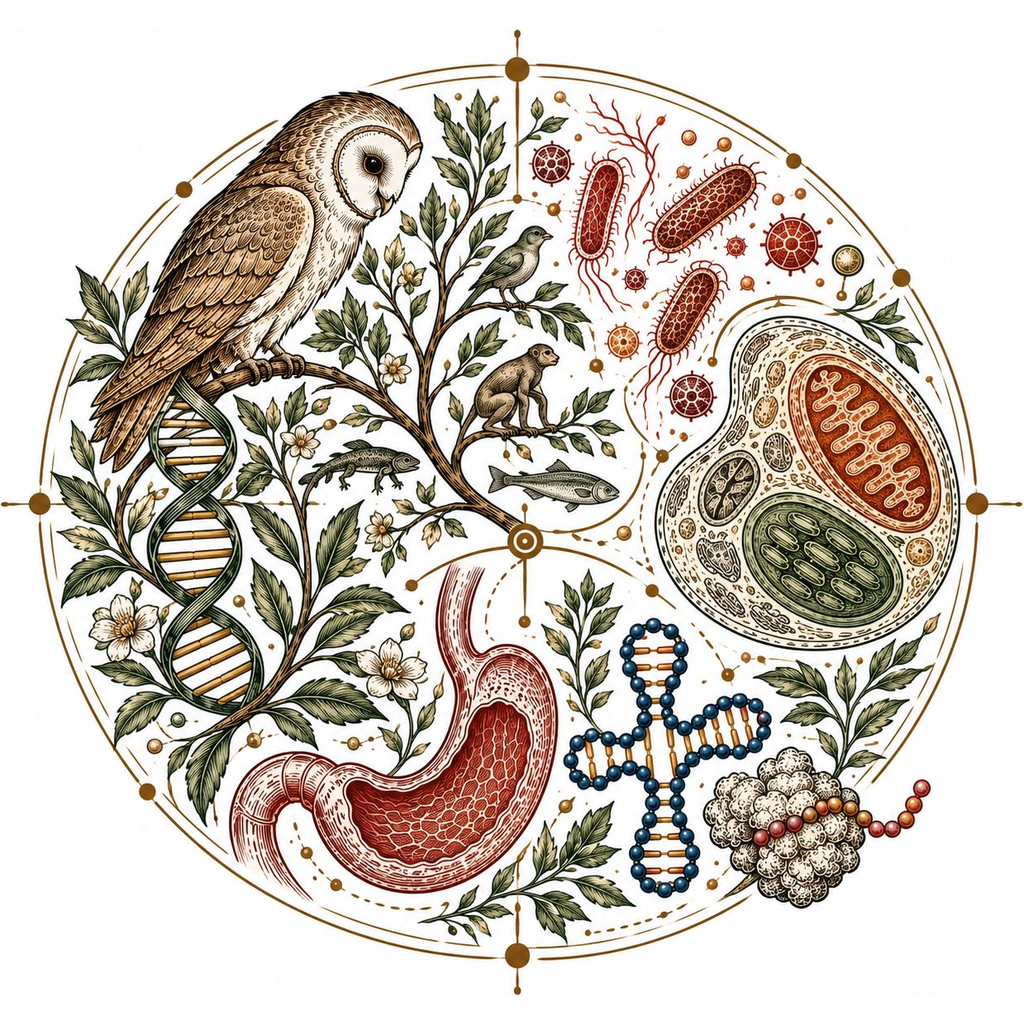
Evolution. Genetic information. Morphogenesis. Endosymbiosis.
Each of these ideas was met with resistance when first proposed. They challenged our perception of the life around us. Their proposers faced professional ridicule and social ostracism. Yet each one of these ideas and many more like them, became a fundamental part of our understanding of life. How many more such ideas are hiding in the nooks and crannies of scientific minds — too nascent to be disclosed, too premature to be taken seriously and too heretical to be considered acceptable?
A science, like a religion, develops an orthodoxy, and those whose thought diverges from it become heretics. Although in the present age they are not likely to be burnt at the stake or forced by torture to recant, they can be penalized in various ways. Editors of scientific journals may reject their contributions; reviewers censure their books; universities are reluctant to give them professorships. Nevertheless, the scientific heretics of one age may become the revered pioneers of a later age.
With the stakes for heresy so dramatically lowered, we ask: why does this age produce fewer heretics than it should?
Bring back the bygone era of informed heresy in the natural sciences! We exist to give such ideas flight — a space where they can be disclosed, discussed and developed for experimental scrutiny. Where informed speculation can be indulged. Where success is judged by heresy of belief and experimental roadmap, not conformance to the published word.
Heresy drives progress
History bears witness to the idea that some of our largest conceptual leaps started out as outlandish claims. It was easy to dismiss these leaps as rampant speculation. However, they were anything but. Instead, they were informed speculations. The kind of reasoning that made a leap of imagination from the evidence available. An attempt to extract abstractions from observations that already existed, extended past the point where the data currently stops.
This balance between restraint and audacity is what allows progress in biology to occur: restraint in allowing evidence to determine what survives, and audacity in imagining what the evidence does not yet show. Palaeontology makes this necessity particularly obvious. The fossil record is incomplete, and extinct organisms cannot be observed directly. Speculation is not an optional embellishment here, it is the process by which fragments of bone become an animal that lived and died.
Consider four cases.
Darwin’s story is the canonical example of heresy. He had no mechanism of heredity. Natural selection required variation to be inherited, and the account of how anything is inherited did not exist and would not exist for decades. The theory was a vast abstraction over pigeons, barnacles, finches and fossils, and its central requirement sat unexplained at its foundation for fifty years. It was correct anyway.
His heresy was not only against the church. Design was the scientific explanation of adaptation at the time, and the objection that hit hardest came from inside science: he could not explain how anything was inherited, and he would remain without an answer for the rest of his life.
What is Life? (Cambridge, 1944), from lectures given at Trinity College Dublin the year before. In 1944, Schrödinger proposed the gene as an “aperiodic crystal” — a time when heredity was thought to be carried by proteins, with nucleic acids being too monotonous to hold a message. A physicist, working from thermodynamics and mutation rates rather than from any new biological data, argued that hereditary information had to be carried by a molecule that was structurally regular and yet not repetitive — the only arrangement that could store a large message stably at that scale. The double helix was nine years away. Both Watson and Crick later credited What is Life? with directing them toward the problem.
“The Chemical Basis of Morphogenesis”, Phil. Trans. R. Soc. B 237 (1952). Marine angelfish pigmentation: Kondo and Asai, Nature, 1995. Turing wrote down the chemistry of pattern formation in 1952 with no morphogens in hand. “The Chemical Basis of Morphogenesis” proposed that a pair of interacting diffusible substances could break symmetry and generate stripes, spots and whorls spontaneously. He could not name either substance in any organism. Experimental vindication in real tissue — marine angelfish pigmentation, hair follicle spacing, the ridges of the palate — arrived across the following forty to sixty years.
Published under the name Lynn Sagan, J. Theor. Biol., 1967. The figure of about fifteen rejections is her own account, widely repeated since. Margulis belongs in the list as well. Her 1967 argument that mitochondria and chloroplasts descend from free-living bacteria was reportedly rejected by around fifteen journals before publication, and was treated as an embarrassment for years. It is now taught to undergraduates every day.
Sheltering biological hereticism
The situation isn’t too different today. Biology as a field has few articles of faith, many of which are overturnable. What it has instead is a procedural orthodoxy — a structure by which claims are permitted in a certain order: evidence first, then interpretation. Proposing a mechanism which you are unable to demonstrate is not wrong, but it is possibly premature.
This is best characterized in the structure of publications. Speculation, in small doses, is best saved for the closing paragraph of the discussion section. Brief, and clearly marked as not the main contribution. Likewise, careers in science are built around funding cycles, and there are no longer many Medici-esque philanthropists ready to fund years of open-ended and interdisciplinary thinking. The curious and risk-taking polymath did not choose to go extinct; they were selected out.
We exist to change that. We see this as a place that can harbour the ideas of the modern day heretics. We encourage them to share essays, publicly or anonymously, that make a claim about biology which is not yet established: an abstraction, a mechanism or a unifying principle. Something you believe and cannot currently validate. The kind of idea that will be laughed out of the room.
We have one requirement. Every essay must propose what would settle the skepticism — what would have to be observed for the conjecture to hold, and what would show it to be wrong.
The question we keep coming back to, and the one we would like you to answer, is not what you can prove. It is this: what do you think is true about living systems that you cannot yet show? And then tell us what finding out would take.
For more on some examples from history, see Germ Theory, Immunisations, Horizontal Gene Transfer, and Jumping Genes.